
Moving into a new home, whether it’s a house or an apartment, comes with a learning curve. Where’s the stopcock? How does the heating work? What do you do if an alarm goes off in the middle of the night? A home user guide answers exactly these questions, and it’s becoming a standard part of handover packs across the UK.
In this guide, we’ll cover what a home user guide actually is, what a good one should include, who typically needs one, and how it’s different from the more technical O&M manual.
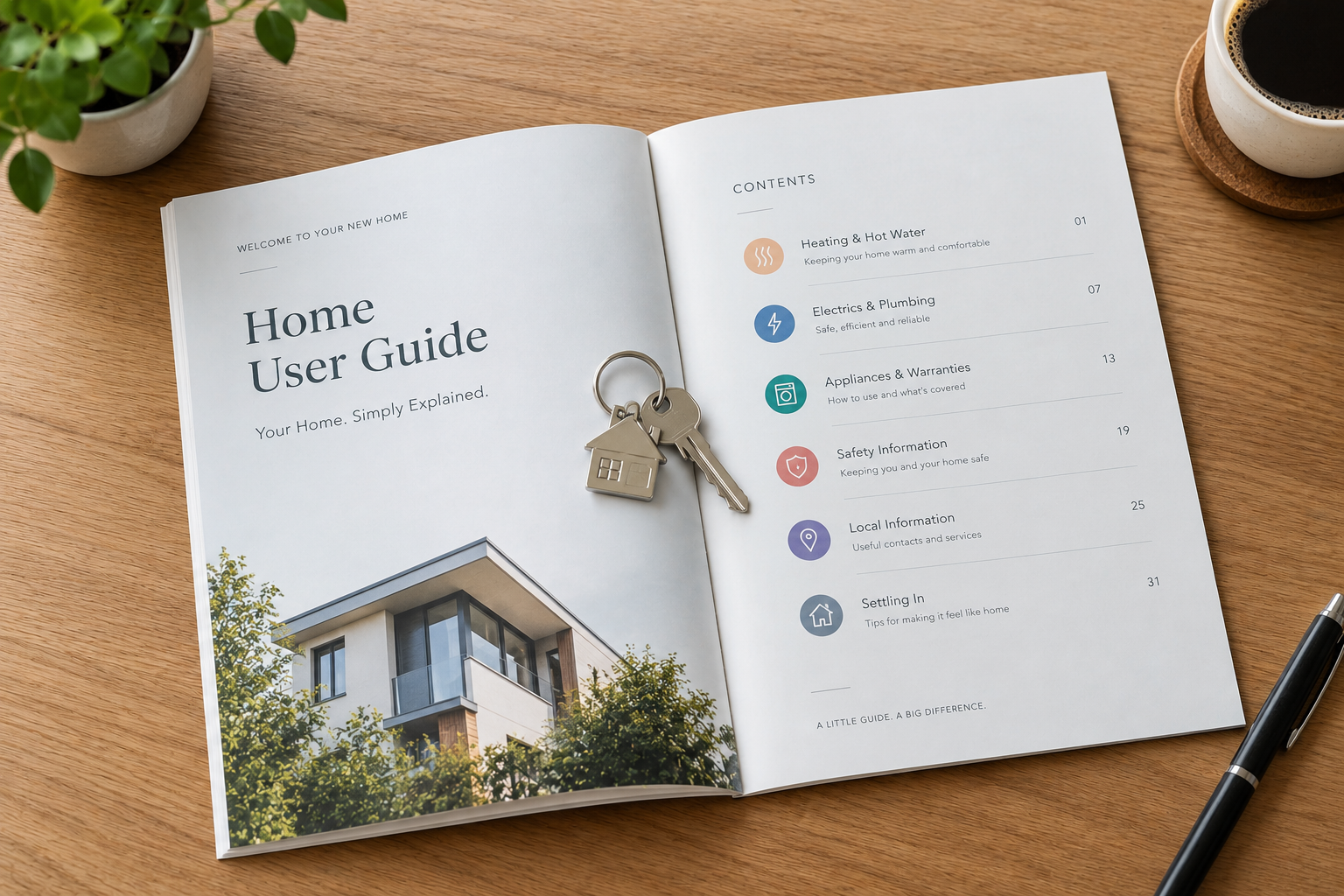
What Is a Home User Guide?
A home user guide is a plain-language document written specifically for the person living in a property, rather than for a facilities or maintenance team. Where a technical manual might reference part numbers and servicing intervals, a home user guide simply explains: here’s how this works, and here’s what to do if something goes wrong.
It’s usually one of the first things a new owner or tenant should look at, ideally before they even need it.
Why Is a Home User Guide Important?
A home user guide helps homeowners understand their property instead of having to work everything out themselves.
For example, if you move into a new home and need to adjust the heating, identify a stopcock or understand how ventilation works, the guide can provide useful instructions.
It can also help you:
- Operate household systems correctly
- Carry out basic maintenance
- Identify potential problems early
- Use appliances and features safely
- Improve energy efficiency
- Keep useful property information in one place
Why Home User Guides Have Become More Common
A few years ago, when people bought a new home, they were usually given a large amount of paperwork and important documents. They were then expected to figure out how everything in the house worked on their own. However, things have changed, and there are several reasons why Home User Guides have become more common.
1. Homes have become more modern and complex
Today, even standard new homes can include smart thermostats, modern ventilation systems, and heating systems that can be controlled through mobile apps. Because these systems can be complicated, homeowners need clear and easy-to-follow instructions to understand how to use them properly.
2. Developers have greater responsibility
Housebuilders are under more pressure to reduce unnecessary problems and complaints after handing over a new home. A good Home User Guide helps homeowners understand the different systems in their home and deal with minor issues themselves. This can reduce the number of avoidable complaints.
3. Customer expectations have increased
Customers now expect a high level of service when they purchase an expensive home. They want clear and easy-to-understand instructions, just as they would receive when buying a new phone or car. A Home User Guide provides homeowners with useful information and helps them feel more confident about using and maintaining their new home.
What Should a Home User Guide Include?
A useful guide should be specific to the property wherever possible. Generic information can be helpful, but homeowners benefit most from instructions relating to the actual systems and products installed in their home.
1. Heating and Hot Water
The guide should explain the home’s heating and hot water system, including basic controls and operating instructions.
It may also provide information about the boiler, radiators, thermostat and other heating components. Homeowners should keep manufacturer manuals and servicing information in a safe place.
2. Plumbing and Water
Knowing where the main water stopcock is located can be particularly useful in an emergency.
A home user guide can explain the location of important controls and provide general information about the property’s plumbing system, drainage and water supply.
3. Electrical Information
Homeowners should know where the consumer unit is located and understand the purpose of its main controls.
The guide can also include information about electrical installations, sockets, lighting and any specialist systems within the property.
Electrical work that requires a qualified professional should not be attempted as a DIY job.
4. Ventilation
Modern homes often rely on ventilation systems to help manage moisture and indoor air quality.
A home user guide should explain how ventilation systems work and how homeowners should use and maintain them. Keeping vents clear and following the manufacturer’s maintenance instructions can help the system operate effectively.
5. Windows and Doors
Windows and external doors may require regular cleaning, adjustment and maintenance.
The guide can explain how to operate locks, vents and other features, as well as provide information about recommended maintenance.
6. Fire and Safety Systems
Safety equipment is an important part of any home.
A guide can identify the locations of smoke alarms, carbon monoxide alarms and other safety features. It should also explain basic testing and maintenance requirements where appropriate.
Home Maintenance Checklist
A home user guide becomes even more useful when combined with a simple maintenance routine.
Homeowners can keep track of tasks such as:
- Checking smoke and carbon monoxide alarms
- Cleaning ventilation grilles
- Checking gutters and downpipes
- Looking for signs of leaks or damp
- Checking seals around windows and doors
- Maintaining heating equipment according to manufacturer guidance
- Keeping appliance manuals and warranties organised
- Checking outdoor areas and drainage
- Recording professional servicing and repairs
The frequency of each task depends on the property’s systems and the manufacturer’s recommendations.
Energy Efficiency and Your Home
Energy efficiency is another useful section of a home user guide.
Homeowners can use information about their property’s heating, insulation, ventilation and controls to understand how the home is designed to operate efficiently.
Simple habits such as using heating controls correctly, avoiding blocked vents and maintaining the property properly can contribute to efficient operation.
For specific improvements, homeowners should consider the property’s construction, existing systems and professional advice where necessary
What to Do When You Have a Problem
If something stops working, the home user guide should be one of the first places to check.
Start by identifying:
- What system or appliance is affected?
- Is there a simple operating issue?
- Does the manufacturer’s manual provide troubleshooting information?
- Is there an obvious safety issue?
- Does the problem require a qualified professional?
Never ignore signs of serious water leaks, electrical faults, gas problems or other potentially dangerous issues. Where safety is concerned, always use an appropriately qualified professional.
Keep Your Home User Guide Up to Date
A home user guide should not be treated as a document you read once and forget.
Keep it updated when you:
- Replace an appliance
- Upgrade the heating system
- Make significant changes to the property
- Receive new warranties or certificates
- Have maintenance or servicing completed
Keeping these records together can make future maintenance much easier.
Conclusion
A home user guide is a valuable resource for UK homeowners, providing practical information about how to use, maintain and care for their property. From heating and plumbing to ventilation, electrical systems and safety features, having the right information readily available can make everyday homeownership easier.
Whether you have recently moved into a new home or have owned your property for years, keeping your home user guide accessible and up to date can help you understand your home’s systems, carry out routine maintenance and deal with common issues more confidently. It can also help you keep important manuals, warranties and maintenance records organised in one place.
Ultimately, a well-maintained home user guide helps homeowners look after their property properly and get the best from their home for years to come.
Frequently Asked Questions
What is a home user guide?
A home user guide is a document that gives homeowners essential information about their property. It explains how different parts of the home work and provides useful guidance on using, maintaining and caring for the property.
What is the purpose of a home user guide?
The main purpose of a home user guide is to help homeowners understand their property and use its features correctly. It acts as a handy reference for everyday use, maintenance and general property care.
Do all new homes come with a home user guide?
The information provided with a new home can vary depending on the developer and property. Homeowners may receive a range of documents, manuals and information covering the property’s systems, appliances and maintenance requirements.
What information can I find in a home user guide?
A home user guide can contain information about the property’s heating, hot water, ventilation, plumbing, electrical systems, appliances, materials, maintenance and safety features. The contents will depend on the individual property.
Is a home user guide the same as a house manual?
The terms can sometimes be used interchangeably. Both generally refer to information that helps occupants understand and look after a property, although the exact contents and format can vary.
Who should use a home user guide?
A home user guide is primarily useful for homeowners and occupants. It can also be helpful when a property changes ownership because it gives the new occupants important information about the home.
Where should I keep my home user guide?
Keep your home user guide somewhere safe and easily accessible. A digital copy can also be useful as a backup, particularly if the guide contains important manuals, maintenance information or property records.
Can a home user guide help me save money?
It can help homeowners understand how to use heating, ventilation, appliances and other systems correctly. Using these systems as intended and following recommended maintenance guidance may help avoid unnecessary problems and improve efficient operation.