
Managing a building effectively requires more than just maintaining its physical systems. Building owners, facilities managers and maintenance teams need accurate information about the equipment and assets installed within a property. This is where an asset register becomes an essential part of building information management. Understanding asset registers usage and preparations is essential for anyone managing a building.
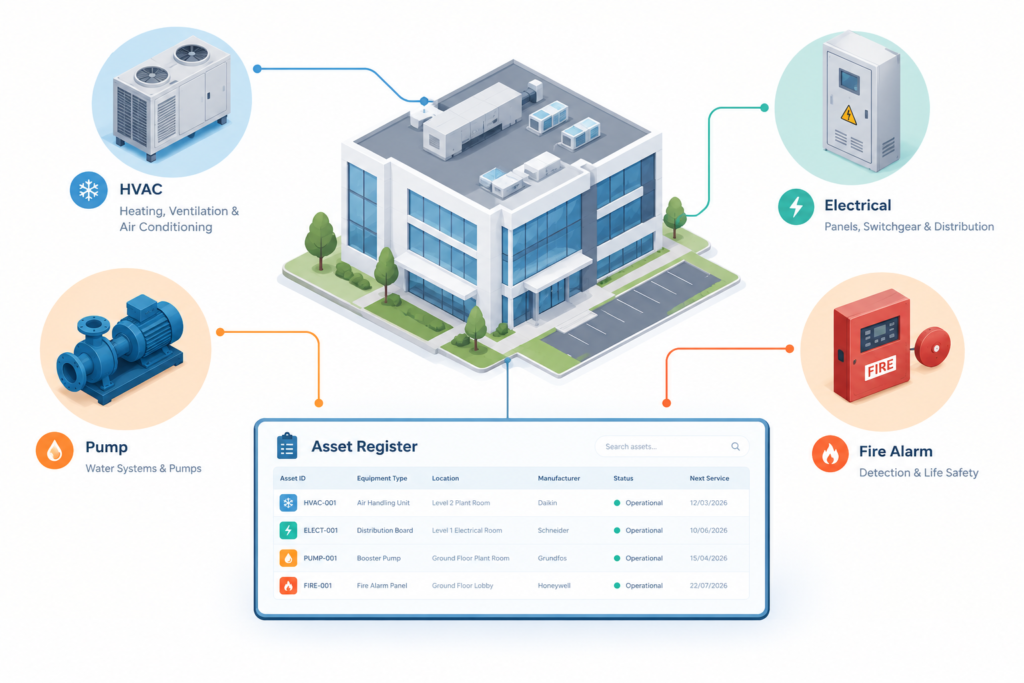
An asset register provides a structured record of the assets within a building, including information such as asset identification, location, manufacturer, model, condition and maintenance requirements. When properly prepared and maintained, it can support planned maintenance, asset management, building handover and long-term facilities management.
In this guide, we explain asset registers usage and preparations, what information an asset register should contain, how it is prepared, and how it can support the ongoing operation of a building.
What Is an Asset Register?
Good asset registers usage and preparations begin with a clear understanding of what the register should contain. An asset register is a structured record of the maintainable assets and equipment within a building or facility.
For a construction or building project, these assets may include:
- HVAC equipment
- Boilers and heating systems
- Pumps
- Electrical equipment
- Fire alarm systems
- Emergency lighting
- Lifts and escalators
- Plumbing equipment
- Building management systems
- Security systems
- Specialist mechanical and electrical equipment
Each asset can be given a unique identification number so that facilities and maintenance teams can easily identify the equipment on site.
The UK Government’s Facilities Management Standard defines an asset register as a list of assets containing the relevant data fields needed to manage those assets. It also states that complete and accurate asset data forms the foundation of facilities-management services.
Why Are Asset Registers Important?
Good asset registers usage and preparations can make a measurable difference to how a building is managed. A well-prepared asset register gives building owners and facilities managers a reliable source of information about the equipment they are responsible for.
Better Maintenance Planning
Asset information can help maintenance teams identify equipment and organise planned preventative maintenance activities.
Improved Asset Management
A clear record of assets allows facilities managers to understand what equipment is installed, where it is located and what maintenance it requires.
Easier Building Handover
An asset register can form an important part of the information handed over when a construction or refurbishment project reaches completion.
Better Lifecycle Planning
Information such as asset age, condition and expected service life can help organisations plan future repairs, replacements and investment.
Each of these benefits depends on consistent asset registers usage and preparations from the start.
Improved Operational Decision-Making
Reliable asset data allows facilities teams to make decisions based on accurate information rather than incomplete or outdated records.
The UK Government’s FM guidance specifically links asset data with maintenance, service delivery and evidence-based decision-making.
Asset Registers Usage and Preparations
The preparation of an asset register involves more than simply creating a spreadsheet. The information needs to be collected, checked, structured and linked to the actual assets installed within the building.
A typical asset register preparation process includes the following stages.
1. Identify the Building Assets
The first step is to identify the assets that need to be included in the register.
Information can be gathered from:
- Design drawings
- As-built drawings
- Equipment schedules
- Specifications
- Manufacturer documentation
- Commissioning records
- Installation information
- Site surveys
- Contractor and subcontractor records
A site inspection can also help confirm that the equipment shown in the documentation matches what has actually been installed.
2. Collect Asset Information
Once the assets have been identified, relevant information should be collected for each item.
Depending on the project requirements, this may include:
- Asset ID
- Asset description
- Asset category
- Manufacturer
- Model number
- Serial number
- Location
- Floor or room
- Installation date
- Commissioning date
- Warranty information
- Maintenance requirements
- Condition
- Operational status
- Expected service life
The exact data requirements can vary between projects. The UK’s Government Property Data Standard, for example, includes fields such as an FM Asset Name, unique FM Asset ID and system/element group.
3. Assign Unique Asset Identification
Each asset should ideally have a unique reference or identification number.
For example:
- HVAC-001
- HVAC-002
- ELEC-001
- FIRE-001
- PUMP-001
Using a consistent numbering system makes it easier to connect the digital asset record with the physical equipment on site.
Best-practice guidance recommends that electronic asset registers correlate clearly with physical installations, making information easier to access, audit and update.
4. Verify the Asset Data
Data verification is one of the most important stages of asset register preparation.
Information should be checked against available project documentation and, where appropriate, the physical installation.
This can identify problems such as:
- Missing assets
- Incorrect equipment locations
- Incorrect model numbers
- Duplicate asset records
- Outdated information
- Equipment changes made during construction
The UK Government’s asset-data standard recommends initial asset verification and ongoing data-quality checks to help maintain complete and accurate records.
5. Structure and Format the Register
Once the information has been verified, it should be organised into a format that is easy for the intended users to access and maintain.
Depending on the project, an asset register may be delivered through:
- Excel
- CAFM software
- Asset management software
- Facilities management platforms
- Common data environments
- Other digital building-management systems
Electronic registers can also be integrated with maintenance scheduling and CAFM systems, helping teams use asset information as part of their everyday facilities-management activities.
What Information Should an Asset Register Include?
This table reflects the kind of information that supports good asset registers usage and preparations. The information included will depend on the building and the client’s requirements. However, a comprehensive building asset register may include:
| Asset Information | Example |
|---|---|
| Asset ID | AHU-001 |
| Asset Type | Air Handling Unit |
| Manufacturer | Manufacturer Name |
| Model Number | ABC-500 |
| Serial Number | SN123456 |
| Location | Level 2 Plant Room |
| Installation Date | 2026 |
| Condition | Good |
| Warranty | 5 Years |
| Maintenance Requirement | Annual Service |
| Operational Status | Operational |
For larger or more complex projects, additional information such as asset criticality, condition, maintenance history and lifecycle information may also be required.
Asset Registers and Building Handover Documentation
Good asset registers usage and preparations at this stage can save significant time later. An asset register can be particularly valuable during building handover.
At the end of a construction project, the client and facilities team need reliable information about the building’s installed systems and equipment. An asset register provides a structured way of presenting this information.
It can be used alongside:
- Building O&M Manuals
- As-built drawings
- Test certificates
- Commissioning records
- Warranties
- Manufacturer literature
- Maintenance schedules
- Health & Safety information
Guidance from Imperial College London, for example, includes asset registers as part of its O&M manual production guidance.
This makes the asset register more than just a list of equipment—it becomes part of the wider building information required for effective operation and maintenance.
How Asset Registers Support Facilities Management
This shows why asset registers usage and preparations matter long after a building is handed over. Once a building is operational, an asset register can continue to provide value.
Facilities teams can use asset information to:
Plan Preventative Maintenance
Maintenance activities can be organised around specific assets and their required servicing intervals.
Monitor Asset Condition
Condition information can help identify equipment that may require repair, replacement or further investigation.
Support Replacement Planning
Asset age, condition and expected service life can contribute to long-term lifecycle planning.
Improve Maintenance Records
Maintenance activities can be linked to individual assets, creating a clearer history of inspections and servicing.
Support Risk Management
Critical equipment can be identified and prioritised according to its importance to the building or organisation.
The UK Government’s FM standards also describe forward maintenance registers as tools for planning repair and replacement requirements over short-, medium- and long-term periods.
Common Problems with Asset Registers
Many of these problems result from poor asset registers usage and preparations during the early stages of a project. Poor-quality asset register data can reduce the overall value of the asset register.
Common problems include:
Incomplete Information
Some assets may be missing from the register or have important fields left blank.
Inconsistent Naming
Different contractors may use different names or reference systems for similar equipment.
Incorrect Locations
Equipment may have been relocated during construction without the register being updated.
Outdated Information
Assets may have been replaced or removed without the digital record being changed.
Lack of Verification
Information taken directly from drawings or schedules may not always represent the final installed equipment.
For this reason, asset registers should be treated as live building information, rather than documents that are created once and never reviewed.
How Should an Asset Register Be Maintained?
An asset register should be reviewed and updated whenever there is a relevant change to the building or its equipment, ensuring the asset register stays accurate. A well-maintained asset register reduces confusion and saves time during inspections.
For example, the register should be reviewed when an asset is:
- Installed
- Removed
- Replaced
- Relocated
- Upgraded
- Decommissioned
A documented change-control process can help ensure that modifications to asset information are recorded consistently. UK Government guidance recommends change controls and data-quality checks as part of ongoing asset-data management.
Asset Register vs O&M Manual
Although they are closely connected, an asset register and an O&M manual serve different purposes.
An asset register provides structured information about individual assets, while an O&M manual provides the operational and maintenance information needed to use and maintain building systems.
An O&M manual may contain:
- Operating instructions
- Maintenance procedures
- Manufacturer manuals
- Test certificates
- Commissioning information
- Warranty details
- Health & Safety information
- Record drawings
- Asset registers
Together, these documents provide a more complete information package for building owners and facilities-management teams. This reflects sound asset registers usage and preparations as part of a wider documentation strategy.
Best Practices for Asset Register Preparation
These best practices reflect good asset registers usage and preparations throughout a project. For a high-quality asset register, consider the following best practices:
Use consistent asset naming
Use a clear and agreed naming convention throughout the project.
Assign unique asset IDs
Every maintainable asset should have a clear identification reference.
Verify information
Check asset data against the final installation wherever possible.
Keep information structured
Use consistent fields and formats so that the data can be easily searched and transferred.
Connect digital and physical assets
Asset IDs should correspond with physical labels where appropriate.
Keep the register updated
Treat the asset register as a live record throughout the building’s lifecycle.
Plan for future use
Consider how the register will be used by facilities managers, maintenance contractors and asset-management systems after handover.
Conclusion
Proper asset registers usage and preparations can transform how a building is managed. Effective Asset Registers Usage and Preparations can provide significant value throughout the lifecycle of a building. From construction handover to ongoing facilities management, an accurate asset register gives building owners and maintenance teams a structured source of information about installed equipment.
The most effective asset registers are accurate, consistent, clearly structured and regularly maintained. By identifying assets correctly, collecting relevant information, verifying the data and keeping records up to date, organisations can improve maintenance planning, support lifecycle decisions and make building information easier to manage.
When prepared as part of wider building handover documentation, an asset register can also help ensure that important equipment information is organised and ready for the facilities team from the beginning of the building’s operational life. Getting the details right from day one makes a real difference to asset registers usage and preparations over time. Investing time in your asset register now will make building management easier for years to come.
Frequently Asked Questions
1. Can an asset register be created for an existing building?
Yes. An existing building can be surveyed to identify assets and create or update an asset register, which helps build a reliable asset register even where original documentation is incomplete. This highlights the importance of proper asset registers usage and preparations for older buildings too.
2. Can asset registers be used with CAFM systems?
Yes. Asset-register data can be incorporated into CAFM and other facilities-management systems, depending on the system’s data requirements.
3. Should physical equipment have the same ID as the asset register?
Where appropriate, matching physical labels with digital asset IDs can make equipment identification and maintenance activities easier.
4. Can an asset register help with replacement planning?
Yes. Asset age, condition, maintenance requirements and expected service life can help facilities teams plan future replacement and investment.
5. What happens when an asset is replaced?
The asset register should be updated to reflect the replacement, including the new asset’s identification and relevant technical information.
6. Who normally maintains an asset register?
Depending on the project, responsibility may sit with the building owner, facilities-management team, asset manager or appointed service provider.
7. Can an asset register form part of O&M documentation?
Yes. Asset registers are commonly included within or alongside O&M documentation as part of the information required to operate and maintain a building. This reflects best-practice asset registers usage and preparations across the industry.
8. How does an asset register support building handover?
It gives the incoming facilities team a structured record of the equipment installed in the building, helping them understand and manage the assets after handover.