
A business operations manual explains how an organisation carries out its work. A building operation and maintenance (O&M) manual brings together information about the systems and equipment installed in a building. The names sound similar, but the documents serve different purposes.
Knowing which one you need helps you ask for the right information, involve the right people and avoid gaps when a building or business process changes hands.
Business operations manual
How the organisation works.
Processes, responsibilities and instructions for staff carrying out day-to-day business activities.
Building O&M manual
How installed building systems are operated and maintained.
Project-specific technical records for owners, facilities teams and those responsible for maintaining the building.
What does a business operations manual cover?
For the broader principles of creating and managing reliable organisational records, see the ISO 15489-1 overview.
Its scope depends on the organisation. It might explain how staff process an order, approve an invoice, handle a customer enquiry or report a problem. It can bring together standard operating procedures, responsibilities, escalation routes and instructions for business systems.
Useful procedures identify the person responsible, the steps to follow, the expected outcome and where the result is recorded. They should be checked by people who understand the work and updated when the process changes.
What does a building O&M manual cover?
A building O&M manual is prepared around the installed works and the agreed project requirements. Its contents may include system descriptions, equipment schedules, manufacturers’ instructions, maintenance requirements, commissioning records and references to relevant drawings.
The information should help the receiving team locate the correct records and understand the installed systems. It needs to reflect the equipment and project information actually supplied, rather than a generic description of how a business operates.
For construction handovers, see our M&E O&M manual preparation service.
The main differences at a glance
| Area | Business operations manual | Building O&M manual |
|---|---|---|
| Main purpose | Explain repeatable business processes. | Support operation and maintenance of installed building systems. |
| Typical readers | Employees, team leaders and managers. | Building owners, facilities teams and maintenance personnel. |
| Source information | Working procedures, policies and staff knowledge. | Project records, contractor submissions and manufacturers’ information. |
| Typical example | A procedure for approving a purchase order. | Operating instructions and maintenance information for an installed air handling unit. |
| When to update | When business processes, systems or responsibilities change. | When installed equipment, system information or supporting records change. |
Where the two documents can meet
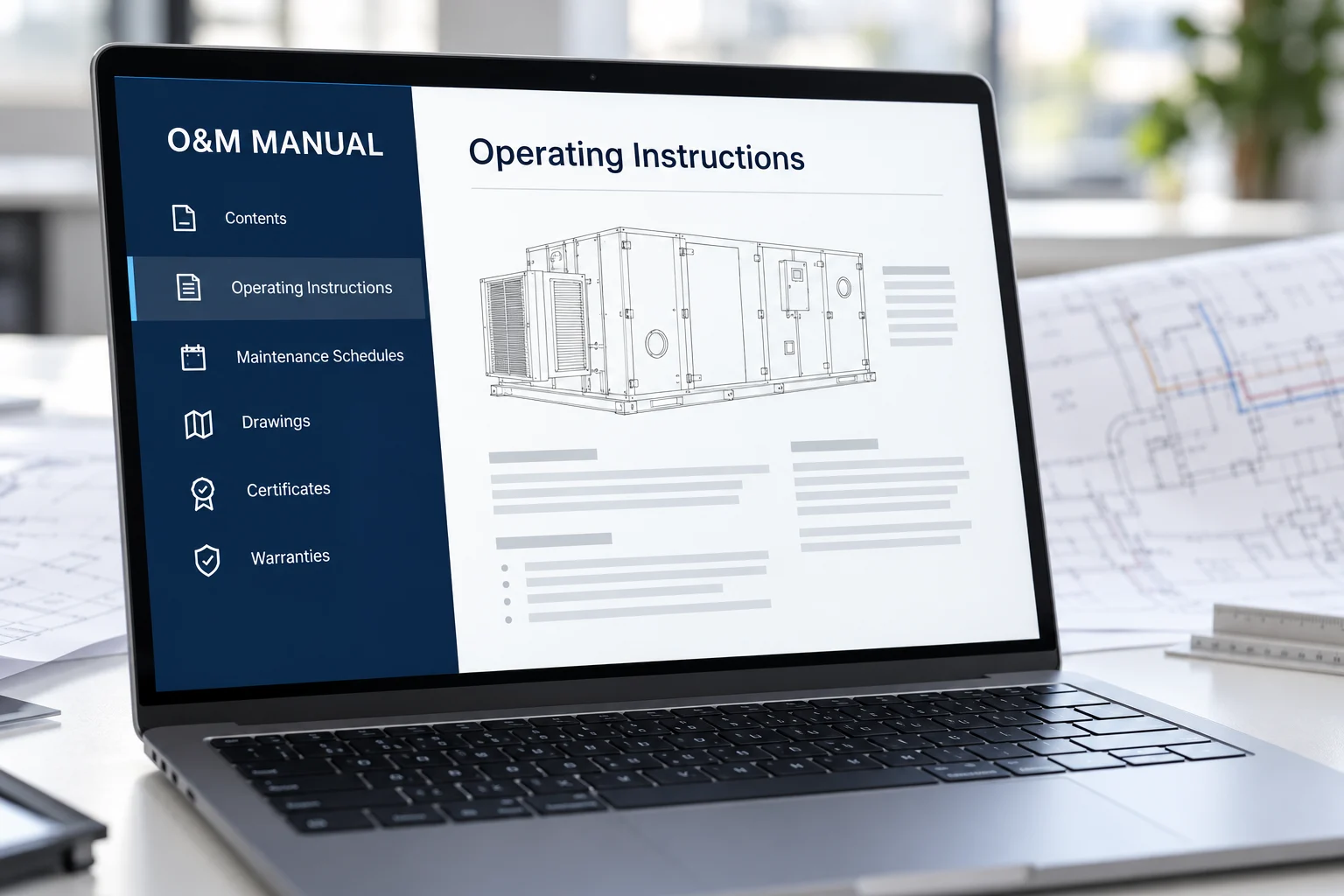
A facilities business may use both. Its business operations manual might explain how a fault is logged, who approves a contractor visit and how completed work is recorded. The building O&M manual provides technical information about the affected system or equipment.
For example, a fault-reporting procedure tells staff who to contact about an air handling unit. The building O&M records help the authorised maintenance team find the relevant equipment information. One document does not replace the other.
Keep instructions appropriate to the user.
A manual supports competent people and suitable training. General business procedures should not be treated as a substitute for manufacturers’ instructions, project-specific safety arrangements or specialist maintenance advice.
Which manual do you need?
- Documenting staff tasks? Start with a business operations manual and involve the people responsible for those processes.
- Preparing a construction handover? Confirm the required building O&M documentation with the project team.
- Managing both business processes and building systems? Keep their purposes clear and cross-reference relevant records where useful.
Before work begins, agree the audience, scope, information sources, review responsibilities and delivery format. This makes the documentation easier to prepare and more useful after issue.
How Master Manuals fits into a building handover
Master Manuals prepares construction handover documentation from information supplied by the project team. Our role here is to organise project-specific building and M&E records; this article is not an offer to prepare general business policies or staff procedure manuals.
If your enquiry concerns building O&M manuals, tell us about the project and the required documentation.
Frequently asked questions
Is an operations manual the same as an O&M manual?
Not necessarily. An operations manual often describes business processes, while a building O&M manual concerns installed building systems. Check the intended scope instead of relying on the name alone.
Can a business operations manual replace building O&M records?
No. General workplace procedures do not provide the project-specific technical records needed to understand installed equipment and its maintenance requirements.
Who provides information for a building O&M manual?
Information is normally gathered from the relevant project participants, such as contractors, specialist installers and equipment manufacturers. Responsibilities and required submissions should be agreed for the project.
Should both manuals be kept up to date?
Yes. Assign responsibility for reviewing each document and updating it when the information it contains changes. Clearly identify the current approved version.