
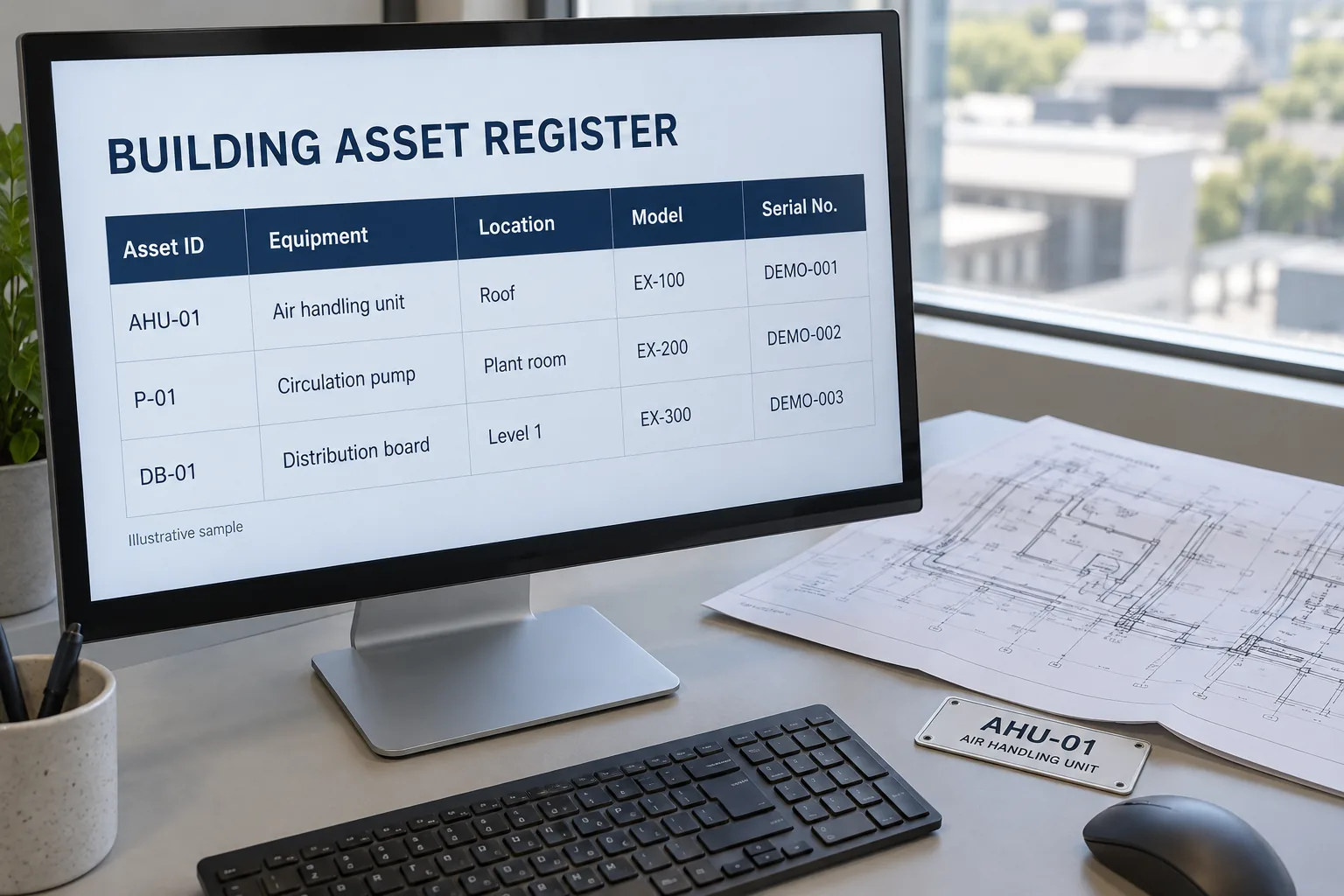
Better building decisions start with knowing what is installed, where it is and which information belongs to it.
Asset management services help organisations make decisions about the assets they depend on throughout their life. For a building, that can involve planning how equipment is operated, maintained and eventually replaced. Reliable records support this work by giving the people responsible a clearer view of the installed equipment.
An asset register is one part of that information. It brings together equipment references, locations and identifying details, with references to supporting documents where available. This guide explains how those records support building management and how preparing a register differs from managing the assets themselves.
The key distinction
An asset register records information about equipment. Asset management uses information, professional judgement and ongoing action to manage that equipment over time.

What can asset management services cover?
The term covers a broad area. Depending on the appointment, it may include assessing equipment condition, planning maintenance, considering replacement priorities and reviewing costs and risks. The actual scope should be agreed with the appointed provider.
In a building, the assets might include air handling units, pumps, distribution boards, lifts and other installed systems. Managing these assets involves more than recording their names: the responsible team needs appropriate information, competent people and arrangements for taking action.
For an overview of the wider discipline, see ISO’s explanation of asset management principles. Preparing a register alone does not demonstrate conformity with an asset management standard.
Why accurate building records matter
Equipment information is easier to use when the register, drawings and supporting documents refer to the same asset consistently. Clear records can help a facilities team:
- Identify an item and locate its operating or maintenance instructions.
- Check available manufacturer, model and warranty information.
- Connect equipment to its building, floor, room or plant location.
- Identify missing details that need confirmation before relying on the record.
These are practical benefits of organised information. A register does not itself inspect equipment, prevent failures or guarantee financial savings.
Asset register preparation and ongoing asset management
Preparing the record
Agree the fields and equipment scope, organise the supplied information, identify gaps and compile the register for review.
Managing the equipment
Keep information current, arrange appropriate inspections and servicing, assess condition and make operational or replacement decisions.
The two activities support each other, but their responsibilities differ. A documentation appointment should not be assumed to include site surveys, maintenance work, software implementation or continuous performance monitoring.
A practical example: finding the right pump information
Suppose a building team needs the maintenance instructions for a circulation pump. A consistent asset reference, such as P-01, can connect the pump’s register entry with its location and the relevant O&M information. If the model or serial number is missing, the team can see what still needs confirmation.
P-01
Equipment reference
Plant room
Recorded location
O&M information
Supporting instructions
This example illustrates a route to information, rather than an actual project record. Maintenance decisions must still follow the relevant instructions and the judgement of the responsible competent team.

From project handover to day-to-day use
At handover, equipment schedules, drawings, manufacturer information and commissioning records may be available from different members of the project team. Preparing the register brings the agreed details into one structure and makes outstanding information easier to identify.
- Agree the information needed. Confirm the equipment scope, client template and required fields.
- Compile and check the records. Use supplied information and flag gaps or conflicting details for confirmation.
- Review the handover issue. The project team checks the register against the agreed requirements.
- Assign responsibility for updates. Keep records current when equipment is moved, replaced or otherwise changed.
The O&M manual provides the more detailed operating and maintenance information that an equipment register can reference.
Common information problems to avoid
- Inconsistent references: the same equipment appears under different names in separate documents.
- Unclear locations: a description identifies the system but not where the item is installed.
- Unverified details: information is copied from an earlier issue without confirmation that it applies to the installed equipment.
- No owner for updates: the register becomes outdated after changes to the building.
Clear naming conventions, an agreed review process and a named person or team responsible for updates help keep the information useful.
Where Master Manuals fits
Master Manuals prepares project-specific building asset registers using information supplied by the project team. Our role is to organise the agreed equipment details and document references into a structured record for handover and future use.
The fields, output format and preparation scope are agreed around your requirements. Missing or conflicting details are identified for confirmation; they are not guessed. After handover, the building’s responsible team should keep the register up to date.
Explore our Asset Register preparation service for details of the records we can help compile.
Frequently asked questions
Is an asset register the same as an asset management system?
No. A register is a record of asset information. Asset management involves wider responsibilities, processes and decisions; it is not simply a spreadsheet or software product.
Can accurate records help with maintenance planning?
Yes. Equipment identification and references to relevant instructions can help the responsible team locate the information needed for planning. The register does not replace maintenance guidance, inspections or competent assessment.
Does Master Manuals provide ongoing maintenance or monitoring?
The service described here is preparation of building asset registers from supplied project information. Any additional work would need to be expressly agreed; routine maintenance and continuous monitoring are not part of the preparation scope described here.
Who should update the register after handover?
The building owner or responsible management team should assign this responsibility and arrange updates when equipment details or supporting records change.
Organising equipment records for handover?
Share your equipment scope, available project records and required handover date so we can review the preparation requirements.